Disclosure: Thnktnk may earn a commission if you click some provider links, but our comparisons are written from public sources and editorial checks. Read more on our about page and editorial policy. This article is not personal financial advice. Investments can fall as well as rise.
A low-cost Stocks and Shares ISA sounds simple until you make your first real comparison. One platform says commission-free. Another says the ISA is included on a free plan. Then the real decision starts: FX fees, transfer support, product range, cash treatment, support priority, and whether the platform's account structure fits how you invest.
The practical thesis is this: Trading 212 vs Freetrade ISA is not a one-line fee comparison. Trading 212 looks stronger if you value multi-currency handling, investing automation, and free transfer messaging. Freetrade looks clearer if you want a visible plan ladder and want to understand exactly how Basic, Standard, and Plus change your FX and account features.

Trading 212 vs Freetrade ISA: quick verdict
Trading 212's official Invest page describes commission-free investing, Stocks and Shares ISA access, pies, fractional shares, multi-currency investing, and portfolio transfers. It also says Trading 212 UK Ltd is authorised and regulated by the FCA under firm reference number 609146. The platform's own cash-interest page warns that capital is at risk and explains that some uninvested cash treatment can involve qualifying money market funds.
Freetrade's official pricing page now shows a Basic plan at £0 per month with a Stocks and Shares ISA included. The same pricing page lists paid Standard and Plus tiers, with non-GBP FX fees stepping down from 0.99% on Basic to 0.59% on Standard and 0.39% on Plus. Freetrade's ISA page also publishes a cost-comparison disclosure and says users should confirm current charges on provider websites.
The short version: Trading 212 may be the cleaner fit for investors who want an app with broad low-cost investing features and multi-currency flexibility. Freetrade may be the cleaner fit for investors who prefer seeing what the free plan includes and what a paid tier changes.
At-a-glance comparison
| Decision point | Trading 212 | Freetrade |
|---|---|---|
| ISA availability | Stocks and Shares ISA promoted on the official Invest page | Stocks and Shares ISA included on Basic, Standard, and Plus plan comparison |
| Platform fee framing | Commission-free investing, with other fees and terms applying | Basic £0 per month; Standard and Plus paid tiers |
| Non-GBP FX | Official cash-interest page references a 0.15% FX fee for conversion | 0.99% Basic, 0.59% Standard, 0.39% Plus |
| Investment style | App-led investing, pies, fractional shares, multi-currency features | App-led investing with plan-based feature upgrades |
| Portfolio transfers | Official page promotes portfolio transfers from and to other brokers as automatic, paperless, and free | ISA page tells readers to check transfer charges and terms before transferring |
| Protection framing | FCA-regulated UK entity listed; capital-at-risk and cash treatment caveats shown | Capital-at-risk and ISA rules language shown across pricing/ISA pages |
| Main friction to check | Exact current fee schedule and cash treatment for your account type | Whether Basic is enough or a paid tier is justified by your trading behaviour |
| Better fit if | You want automation, multi-currency features, and low visible trading friction | You want plan transparency and can model FX costs by tier |
Fee model: free trading does not mean zero cost
Trading 212 and Freetrade both use low-cost investing language, but the cost profile is different.
Trading 212's official Invest page leads with commission-free investing and points readers to its terms and fees. Its interest-on-cash page says users can deposit, invest, and hold cash in multiple currencies and convert with a 0.15% FX fee. That makes FX behaviour important if you buy US shares or ETFs priced outside sterling. A small FX percentage can matter more than a headline platform fee if you trade internationally often.
Freetrade's pricing page is more explicit in the page copy visible to readers. Basic is £0 per month. Standard and Plus are paid plans, with annual billing shown as £4.99 and £9.99 per month equivalents, and the comparison table shows FX fees of 0.99%, 0.59%, and 0.39% across Basic, Standard, and Plus. Freetrade also says commission-free trades are unlimited, but other charges may apply.
The reader-fit point is simple. If you mainly buy UK-listed assets and rarely convert currency, the headline account cost may matter most. If you buy US shares often, FX can become the cost that decides the comparison.
Trading 212: where it looks strongest
Trading 212 is likely to appeal to readers who want an investing app that keeps the visible friction low. Its official Invest page promotes commission-free investing, stocks and ETFs, pies, fractional shares, ISA access, and portfolio transfers. It also highlights 12 global currencies and says users can deposit and invest across multiple currencies.

The standout use case is a UK investor who wants a Stocks and Shares ISA but also expects to buy non-UK assets. Multi-currency support can reduce repeated conversion friction if used carefully, though readers still need to check the current terms and any relevant account restrictions before assuming it is cheaper for their exact behaviour.
Trading 212's portfolio transfer messaging is also notable. The official Invest page says users can transfer a portfolio from and to other brokers and describes the process as automatic, paperless, and free. That does not mean every asset, wrapper, or legacy provider will move without delay. It does mean transfer support is part of the product positioning, which matters if you already hold an ISA elsewhere.
The main caution is that the page view available for this review did not expose a full detailed fee table. For this reason, this article uses only the fee points visible on official pages and treats current terms as something readers should re-check before opening or transferring.
Freetrade: where it looks strongest
Freetrade is likely to appeal to readers who want a clearer plan ladder. Its pricing page shows three plans: Basic, Standard, and Plus. The Basic tier is shown at £0 per month and includes a Stocks and Shares ISA, Junior ISA, Pension, and General Investment Account. The same page says Basic includes commission-free investing in Freetrade's universe of stocks, ETFs, and investment trusts.
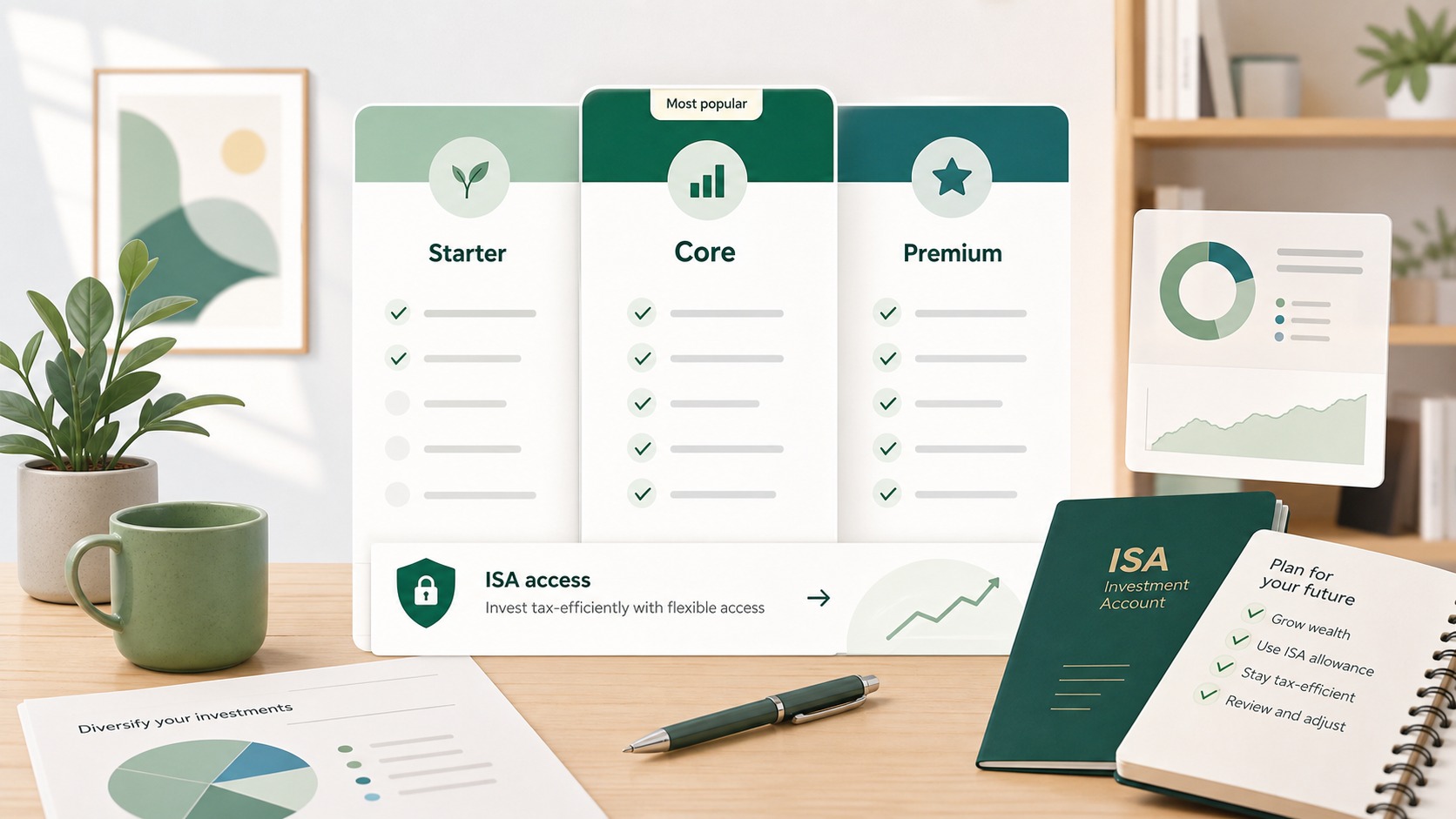
The main reason to look closely at Freetrade is that the fee tradeoff is visible. A Basic user pays no monthly subscription but faces the highest non-GBP FX fee listed on the pricing table. Standard and Plus reduce FX fees and add features. If you rarely trade US shares, Basic may be enough. If you trade US assets regularly, the lower FX rates on paid tiers may matter, but only if the subscription cost is justified by your activity.
Freetrade also publishes cost scenarios on its ISA page. Those examples are useful because they show how subscription fees, dealing commission, and FX can combine. The page also includes a comparison disclosure dated 24 March 2026, which is a useful reminder that provider costs should be checked at source before acting.
The main caution is that a plan structure can create false simplicity. A free ISA is useful, but only if the assets, FX cost, support level, and withdrawal or transfer experience fit the way you actually invest.
Investment range and account fit
Both platforms are app-first investing services for UK users, but their range and packaging are not identical.
Trading 212's public Invest page highlights thousands of stocks and ETFs, fractional shares, pies, and multi-currency handling. That points toward a self-directed investor who wants to build or automate a portfolio inside the app. It may be especially relevant if you like regular investing habits, model portfolios of your own, or the ability to hold balances in more than one currency.
Freetrade's public pricing page highlights stocks, ETFs, funds, gilts, Treasury bills, investment trusts, REITs, US fractional shares, and account types across ISA, Junior ISA, SIPP, and GIA. The important distinction is that Freetrade makes its plan comparison central. Readers should check whether the assets they want are available on the tier they intend to use.
For a simple UK ETF portfolio, either platform may be enough. For a more specific portfolio, do not rely on brand familiarity. Search the platform's live investment universe, check whether your target funds or shares are available, and check whether they can be held in the ISA wrapper.
Transfers, exit friction, and support
Transfer friction is easy to ignore when opening a new ISA. It becomes important when you want to consolidate, switch, or leave.
Trading 212's official Invest page says portfolio transfers from and to other brokers are automatic, paperless, and free. That is useful positioning for readers who already have a portfolio elsewhere. Still, transfer success depends on asset eligibility, the sending provider, wrapper rules, and whether the receiving platform supports the same investments.
Freetrade's ISA page includes transfer-related caution in its cost comparison area, telling readers to check whether they could lose valuable guarantees and to understand any transfer charges from the existing provider. That is good general transfer discipline. It also means readers should not compare only account-opening cost. The exit process matters too.
Support is harder to compare from public pages without live account use, and this article does not claim first-hand support experience. The practical check is to read current help-centre transfer pages, look for in-specie versus cash transfer handling, and confirm whether you can move out without selling investments you would prefer to keep.
Protection, FSCS limits, and investment risk
Both platforms operate in a regulated UK investment environment, but FSCS protection is often misunderstood.
FSCS's official investment page says investment claims can be protected up to £85,000 per eligible person, per firm when a firm fails after 1 April 2019. It also says FSCS cannot accept claims for poor investment performance. In plain English: FSCS may help if an authorised provider fails and there is a shortfall in money or assets it holds for you. It does not protect you from your ETF, share, fund, or investment trust falling in value.
FSCS also tells readers to check that the provider is authorised by the FCA or PRA and that the specific activity is regulated. Trading 212 lists Trading 212 UK Ltd as FCA regulated on its official page. Freetrade's own pages carry capital-at-risk and ISA-rules language, and readers should check the current FCA register entry before opening an account.
This is where marketing language should stop. A Stocks and Shares ISA is a tax wrapper, not a guarantee. ISA tax treatment can change, investments can fall, and platform protection does not remove market risk.
Which platform may fit which reader?
Consider Trading 212 if you want to compare an app with multi-currency investing, pies, fractional shares, and a visible transfer proposition. It may be a stronger candidate if you plan to hold non-GBP cash or want more automation inside the app.
Consider Freetrade if you want a plan table that clearly separates a free Basic tier from paid Standard and Plus tiers. It may be a stronger candidate if you want to start with a free ISA and then model whether lower FX fees or extra features justify paying later.
Do not choose either platform only because the headline says commission-free or free ISA. Build a small cost model around your likely behaviour: portfolio size, UK versus US assets, trade frequency, currency conversion, transfer plans, and whether you need funds, gilts, a SIPP, or only a Stocks and Shares ISA.
Internal reading before you decide
If you are comparing ISA providers mainly by cost, start with our guide to stocks and shares ISA platform fees. If you also hold cash savings, the Raisin vs Flagstone savings platform comparison explains why provider structure and protection limits matter. If you travel or spend in multiple currencies, our Wise vs Revolut travel card comparison covers a different kind of FX decision. You can also browse the wider comparisons hub as the finance comparison cluster grows.
FAQ
Is Trading 212 cheaper than Freetrade for an ISA?
It depends on your behaviour. Trading 212 promotes commission-free investing and multi-currency features, while Freetrade offers a £0 Basic plan with published FX tiers. If you mainly buy UK assets, subscription cost may dominate. If you buy US assets often, FX can matter more.
Does Freetrade still charge for a Stocks and Shares ISA?
Freetrade's current pricing page shows the Stocks and Shares ISA included on Basic, Standard, and Plus, with Basic listed at £0 per month. Paid tiers may still matter if you want lower FX fees or extra features.
Does Trading 212 charge FX fees?
Trading 212's official cash-interest page says users can convert with a 0.15% FX fee. Check the latest Trading 212 terms before acting, especially if you plan to trade non-GBP assets regularly.
Are Trading 212 and Freetrade covered by FSCS?
FSCS protection depends on the authorised firm, regulated activity, and claim type. FSCS says investment protection can be up to £85,000 per eligible person, per firm, but it does not cover poor investment performance.
Can I transfer an existing ISA to Trading 212 or Freetrade?
Both platforms discuss ISA or portfolio transfer topics publicly, but transfer outcomes depend on the sending provider, asset eligibility, wrapper rules, and whether the receiving platform supports your holdings. Check transfer terms before starting.
Which is better for beginner investors?
Neither platform is automatically better for every beginner. Trading 212 may appeal if you want app automation and multi-currency features. Freetrade may appeal if you want a simple free plan and a visible upgrade path. Beginners should also read risk disclosures before investing.
Source notes
Sources checked on 2026-07-03:
- Trading 212 Invest
- Trading 212 interest and cash treatment
- Freetrade pricing
- Freetrade Stocks and Shares ISA
- FSCS investment protection
This comparison is based on public provider and regulator pages, not first-hand account use. Re-check current pricing, FCA register status, ISA rules, and platform terms before opening or transferring an account.